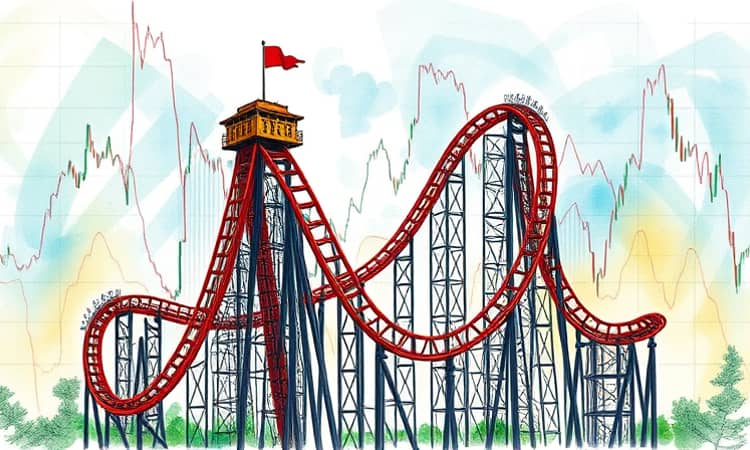
Market volatility often feels like a stormy sea, testing our resilience and resolve. Yet by understanding its nature, we can harness its power and chart a path to lasting success.
What Is Volatility?
At its core, volatility is a statistical measure of price fluctuations over a defined period, typically quantified by the standard deviation of returns. It captures how much and how quickly an asset’s price moves without indicating direction – whether up or down. While volatility and risk are related, they are not identical: volatility measures the range of movement, whereas risk reflects the potential for adverse directional changes or other fundamental challenges like cash flow issues.
Understanding this distinction helps investors see past temporary shocks. An asset can be highly volatile but fundamentally sound, such as gold during geopolitical unrest, or it can appear stable yet carry hidden dangers, like weak corporate debt perpetually yielding small declines.
Types of Volatility
Volatility wears many faces, each providing a different lens through which to view market fluctuations.
- Historical Volatility: A backward-looking measure based on past price data (e.g., 30, 90, or 360 days), calculated via the standard deviation of logarithmic returns.
- Implied Volatility: A forward-looking metric derived from current options prices, reflecting collective market expectations and emotions before major events.
- Clean vs. Dirty Volatility: Distinguishes routine, noise-driven movements (“clean”) from event-driven spikes such as earnings releases or policy decisions (“dirty”).
How We Measure Volatility
Several key metrics help quantify volatility and guide investment strategies:
Beyond these, advanced formulas like the volatility drag (CAGR ≈ AR – ½σ²) emphasize how fluctuations can tax compound growth, especially when returns deviate from a normal distribution.
Volatility in Action: Historical Moments
History offers vivid lessons. During the 2008 financial crisis, equity volatility spiked dramatically: the VIX soared from 19.58 in mid-August to 79.13 by late October, while commodity swings reached 50% above normal levels. Such extremes remind us that even the most stable benchmarks can become choppy seas.
Similarly, individual stocks can exhibit dramatic swings. Imagine a €100 share with low volatility trading between €98–€102 monthly versus a high-volatility stock ranging €85–€115. Both scenarios underscore how volatility shapes investor psychology and decision-making.
Causes of Volatility
Volatility arises from a blend of fundamental, structural, and emotional factors:
- Economic announcements such as tariff changes or GDP surprises.
- Corporate events like earnings releases or mergers, generating forward-looking derived from options prices spikes.
- Market microstructure dynamics, including liquidity provision and adverse selection.
- Shifts in sentiment driven by collective greed and fear.
These forces often cluster, producing periods of sustained calm or turmoil. Recognizing when volatility is likely to intensify helps investors position themselves advantageously.
Emotional Impact and Investor Psychology
Volatility can trigger fear, doubt, and second-guessing. Wider-than-expected swings often lead to emotional stress from wide swings, causing premature exits or reckless doubling-down. Yet understanding volatility as part of the market’s natural rhythm empowers us to remain disciplined.
By reframing volatility as an opportunity rather than a threat, investors can cultivate resilience and maintain focus on long-term objectives.
Strategies for Harnessing Volatility
Whether you are a short-term trader or a long-term investor, volatility offers both challenges and opportunities:
- Short-term traders may exploit fluctuations through strategies like day trading, swing trading, or options trading, using volatility as a direct source of profit.
- Long-term investors often view volatility as long-term perspective helps filter noise, buying during dips and holding through cycles to capture compounding gains.
- Hedging techniques, such as protective puts or covered calls, can provide guardrails during turbulent periods.
Practical Steps to Leverage Volatility
Adopt a proactive approach to volatility with these actionable steps:
- Establish clear position sizing rules to control exposure and manage drawdowns.
- Use volatility-based indicators—like the VIX or average true range—to time entries and exits.
- Maintain a diversified portfolio spanning assets with differing volatility profiles to smooth overall returns.
- Keep a journal documenting emotional responses and decision triggers to learn from past reactions.
Volatility as a Catalyst for Growth
While volatility can feel daunting, it is also a source of opportunity. Fluctuations create windows to buy high-quality assets at discounted prices and to sell overstretched positions at premiums. By adopting a disciplined framework, volatility can be harnessed for growth, turning apparent chaos into a structured pathway toward financial goals.
Remember, the most successful investors in history did not avoid volatility; they embraced it. Legendary figures like Peter Lynch and Warren Buffett capitalized on market swings to build enduring fortunes.
Today, armed with sophisticated tools, data, and a deeper psychological understanding, each of us can transform volatility from a source of anxiety into a strategic ally on the journey to wealth and security.
So the next time the market tides surge and recede, stand firm. Cultivate resilience, employ smart strategies, and let volatility propel you toward your ambitions. After all, in the grand tapestry of markets, it is often the bold who reap the greatest rewards.