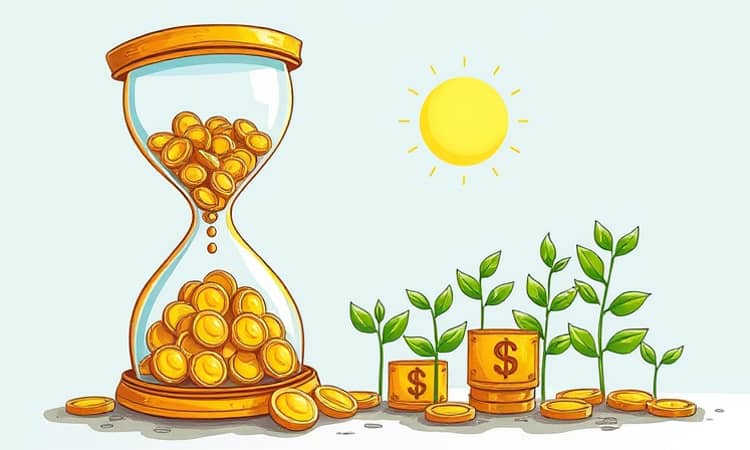
Every dollar we hold today carries possibilities that extend far beyond its face value. By grasping the mechanics behind the time value of money, we unlock strategies to grow wealth and secure our future.
Introduction to the Time Value of Money
The time value of money (TVM) is a fundamental financial concept that asserts a dollar in hand today is worth more than the same dollar received in the future. This principle arises from the potential to earn interest or returns when money is invested.
Consider this simple scenario: you have $100 today. If you invest it at a modest 5% annual rate, it grows to $105 in one year. That future $105 represents not only your original capital but also the earnings generated by putting that money to work.
Why the Time Value of Money Matters
Understanding TVM equips individuals and businesses with the insight to make informed financial decisions. Delaying receipt or deployment of funds can erode purchasing power and opportunity.
- Investment opportunities: Capital can be deployed to stocks, bonds, real estate, or business projects, generating returns over time.
- Inflation erosion: General price levels rise, diminishing the value of money held idle.
- Risk and uncertainty: Future receipts carry default risk or changing market conditions.
- Consumption preference: Human nature often favors immediate gratification over delayed rewards.
By quantifying how present funds translate to future value, TVM serves as the bedrock for budgeting, valuation, and long-term planning.
Core Calculations: PV, FV, and Interest
At the heart of TVM lie two interconnected concepts: present value (PV) and future value (FV). These metrics allow us to translate cash flows across time using an interest rate or discount rate.
Key components include:
- Present Value (PV): The current worth of a future sum discounted at a specified rate.
- Future Value (FV): The amount an investment grows to over time with interest.
- Interest Rate: The rate of return or discount, expressed annually or per period.
- Compounding Frequency: How often interest is added (annually, quarterly, continuously).
Real-World Applications
TVM principles permeate all areas of finance, guiding decisions that shape our economic lives.
- Personal Finance: Retirement planning, education funds, and emergency savings rely on estimating future goals and discounting them to today’s value.
- Business Valuation: Companies employ discounted cash flow models to determine a fair price for acquisitions or investments.
- Loan Amortization: Mortgage and auto loans are structured so that each payment covers interest and principal proportional to the schedule.
- Capital Budgeting: Net present value (NPV) and internal rate of return (IRR) inform which projects will enhance shareholder value.
Advanced Concepts and Strategies
Beyond single sums, financial professionals analyze streams of payments and adjust for real-world complexities.
- Annuities and Perpetuities: Series of equal cash flows, either over a fixed term or indefinitely.
- Net Present Value (NPV): Sum of discounted cash flows minus initial investment, used to gauge project viability.
- Variable Discount Rates: Adjusting the discount rate to reflect changing market conditions or risk profiles.
These advanced tools empower investors to compare alternatives rigorously and to account for inflation, taxes, and uncertainty.
Harnessing the Power of Time
The true magic of TVM unfolds when we embrace long-term wealth accumulation. Small, consistent contributions can snowball into substantial sums through the power of compound growth.
Imagine setting aside $200 a month into an investment yielding 7% annually. Over 30 years, that disciplined habit transforms into nearly $250,000, illustrating how early and regular investing dramatically reshapes outcomes.
Key takeaways to maximize TVM:
- Start saving and investing as soon as possible.
- Choose investments aligned with your risk tolerance and horizon.
- Reinvest earnings to fuel compounding.
- Monitor and adjust strategies to stay on track.
Conclusion: Seizing Your Financial Future
Every moment you delay investing is a missed opportunity for growth. By internalizing the time value of money, you gain the clarity to plan effectively, the confidence to act decisively, and the discipline to stay committed.
Your financial future is not a distant abstraction—it is shaped by the decisions you make today. Embrace the principles of TVM, and let your money work tirelessly on your behalf. The journey toward lasting prosperity begins with understanding the value of time in finance.