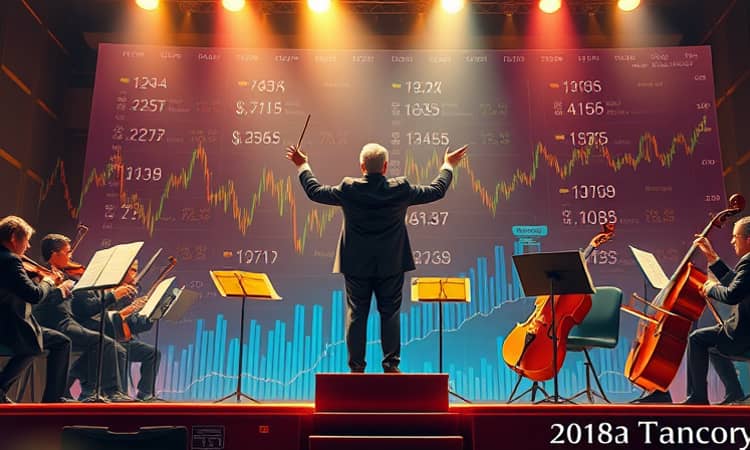
In a world driven by numbers and forecasts, central bankers step onto a grand stage, baton in hand, ready to guide the course of global economies. Like maestros commanding an orchestra, they blend tools and frameworks to deliver a performance that resonates with stability, employment, and growth.
Through crises and calm, these leaders craft policy harmonies that shape everyday life—from the price of a loaf of bread to the availability of jobs. This narrative explores their art, instruments, measurements, and lessons, illuminating how monetary policy becomes a symphony of success.
The Conductor's Role in Economic Harmony
Central banks embody the vision and discipline required to navigate complex economic challenges with finesse. Charged with a delicate balance, they fight inflation while fostering employment, never losing sight of their ultimate goal: preserving trust in the financial system.
Guided by a clear objective, whether a dual mandate of price stability and full employment or a single inflation target, these institutions anchor expectations and inspire confidence in markets, businesses, and households alike.
The Symphony Score: Monetary Frameworks
At its heart lies a robust framework, the musical score that every central bank follows. This score defines goals, clarifies communication, and establishes the mechanics for action.
- Dual mandate with precise targets: Maximum employment and a 2% inflation goal
- Institutional independence and credibility
- Transparent forward-looking guidance to anchor market expectations
- Six key elements linking policy to lower inflation and stable growth
Empirical research confirms that jurisdictions with clear frameworks and consistent messages enjoy lower inflation volatility and stronger economic resilience. By spelling out objectives, timelines, and evaluation metrics, central banks transform uncertainty into predictability.
Instruments of the Orchestra: Policy Tools
The toolbox of a central banker mirrors an orchestra’s diverse instrumentation. From traditional interest rate adjustments to bold, unconventional operations, each tool contributes unique tones and textures.
While rate cuts and asset purchases can revive growth, they also risk inflating asset bubbles. Central banks therefore rely on macroprudential complements to mitigate risk, adjusting guardrails to keep markets healthy.
- Risks of prolonged easing include excessive risk-taking
- Effectiveness depends on neutral rate levels (2–3% ideal)
Performance Metrics: Measuring the Symphony's Success
To evaluate the impact of policy, central banks monitor a suite of indicators. Macro variables like GDP growth and employment rates top the list, but market prices and survey data also play crucial roles.
Across 38 major central banks, 95% use macro indicators, 84% track market signals, and 63% consult inflation expectation surveys. By comparing projected horizons and realized outcomes, they assess credibility, noting that inconsistent policy can cause >4 months deviation from targets.
Innovative techniques, such as Kalman filters for partial information models, refine these measurements, while interest-rate based forecasts offer additional foresight into real economic activity.
Challenges and Lessons: Harmonizing Through Turbulence
The financial crisis of 2008 and subsequent recoveries tested the endurance of traditional tools. QE emerged as a powerful supplement, anchoring inflation expectations and preventing deflationary spirals.
Yet, zero lower bounds and low neutral rates highlighted the limits of monetary policy alone. The Bank for International Settlements recommends a blend of demand compression, robust communication, and financial stability measures to fight inflation without triggering market distress.
Key takeaways include:
- Maintain credibility through consistent messaging
- Combine tools to achieve both price and financial stability
- Adapt frameworks rapidly to emerging risks
Central banks regularly refine their playbooks, incorporating real-time data and lessons from pandemics and geopolitical shocks to ensure future policies remain effective.
Case Studies: Maestros in Action
The Federal Reserve’s explicit forward guidance linking rate paths to unemployment and inflation thresholds showcases a masterful use of narrative and numbers to shape expectations. Its QE programs have become permanent parts of the toolbox, bolstering resilience during downturns.
Across the Atlantic, the European Central Bank and the Bank of England have tailored guidance and asset purchases to regional conditions, while emerging market banks emphasize macro indicators and prudential policies to navigate capital flows.
Despite varying mandates and tools, shared principles—transparency, accountability, and adaptability—unite these institutions in pursuit of economic harmony.
As audiences around the globe witness each policy decision’s ripple effects, central bankers continue refining their symphonies, striving for a crescendo that uplifts economies and enhances prosperity.
Encore: The Future of the Monetary Symphony
Looking ahead, the stage grows more complex: digital currencies, climate risks, and uneven globalization will demand fresh compositions. Yet, armed with credible frameworks and a diverse instrument collection, the Monetary Maestro stands ready to conduct a symphony of lasting success.