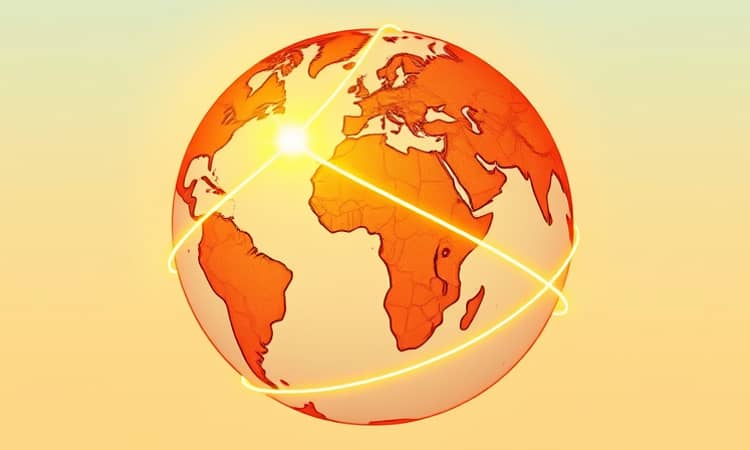
In an era defined by interdependence and shared challenges, the European Union launched its flagship strategy launched in 2021 to reshape global engagement. The Global Gateway aims to mobilize up to €300 billion in loans, grants and guarantees by 2027 for sustainable infrastructure and connectivity worldwide. Today, having already surpassed its initial target with over €306 billion secured as of October 2025, the initiative illuminates a path toward sustainable infrastructure and connectivity that aligns strategic interests with long-term development goals.
A Vision for a Connected Future
Born out of the EU’s desire to offer an alternative to existing large-scale schemes, the Global Gateway fuses external investment, development cooperation and economic diplomacy. Sometimes described as the “European Green Deal Worldwide,” it aspires to counterbalance other global corridors of influence by championing high social and environmental standards and the rule of law. It addresses a critical shortfall: the World Bank estimates €1.3 trillion is needed annually for climate protection, energy and water access, mobility and food security in developing regions. The Global Gateway demonstrates that investments can be both profitable and purposeful, forging resilient partnerships that serve people and planet alike.
Strategic Objectives and Global Impact
This bold framework rests on clear objectives. By combining public and private resources under the Team Europe approach, it leverages the strengths of the EU, its member states and financial institutions to meet shared challenges head-on. Key aims include:
- Aligning EU strategic interests with partner countries’ Sustainable Development Goals.
- Supporting green and digital transitions to foster resilient economies.
- Building long-term partnerships underpinned by transparency and good governance.
- Enhancing health, education and research infrastructure where it is most needed.
Half of all resources are focused on Africa, reinforcing collaboration via the €150 billion Africa-Europe Investment Package. This concentration reflects a commitment to breakthrough projects that address inequalities, empower women and youth, and create jobs.
Financial Architecture of Global Gateway
The initiative’s financial backbone blends grants, guarantees and loans to attract private capital at scale. A cornerstone is the EFSD+ (External Action Guarantee), managed by the European Commission in cooperation with the European Investment Bank and other development finance institutions.
By strategically combining public guarantees and private contributions, the Global Gateway unlocks investment opportunities that might otherwise be deemed too risky. This approach has already catalyzed billions in clean energy, digital networks and transport corridors under construction or in planning.
Transformative Focus Areas
The Global Gateway concentrates efforts across five interlinked sectors, each one a pillar of sustainable development and global resilience.
- Digital Connectivity: Expanding secure broadband, enhancing cybersecurity and bridging the digital divide in remote regions.
- Climate & Energy: Accelerating the shift to renewables, upgrading grids for resilience and supporting climate-smart agriculture.
- Transport Networks: Developing green rail lines, modern ports and smart road systems to facilitate trade and mobility.
- Health Infrastructure: Strengthening supply chains, enabling local vaccine production and bolstering disease surveillance.
- Education & Research: Renovating schools, funding scholarships, and promoting innovation hubs to nurture future leaders.
These focus areas are complemented by targeted technical assistance, policy dialogue and capacity-building measures. Together, they create an ecosystem where infrastructure projects can take root and flourish sustainably.
Geographic Reach and Flagship Initiatives
While the Global Gateway’s reach is global, certain regions receive particular emphasis to maximize impact and strategic value.
- Africa: Deploying €150B to support critical sectors via public-private partnerships and joint EU-African Union efforts.
- Western Balkans: Mobilizing €263M for digital, energy and transport upgrades, including electrification of rail connections.
- Ukraine: Providing energy equipment, grid modernization and humanitarian support amid ongoing challenges.
- Other Regions: Engaging Eastern Partnership countries, Central Asia, Latin America and South Asia with tailored programs.
From water treatment plants in Bosnia to advanced AI testbeds in North Macedonia, more than 264 flagship projects launched between 2023 and 2025 showcase the initiative’s diversity and ambition.
Partnerships, Challenges and the Road Ahead
At its heart, the Global Gateway is a network of partnerships. The Team Europe approach integrates the EU, member states, export credit agencies and private enterprises into cohesive project pipelines. Externally, alignment with G7’s Partnership for Global Infrastructure and Investment and cooperation with the US Build Back Better World underline its international resonance.
Yet challenges persist. Geopolitical fragmentation can complicate harmonization of standards. Mobilizing private investors requires steady political will and risk mitigation. And competing initiatives may offer different trade-offs between speed and social safeguards.
Nevertheless, the Global Gateway’s achievements to date—€306 billion mobilized, hundreds of infrastructure partnerships, and a growing global brand—testify to its potential. As the world navigates climate crises, digital revolutions and shifting power dynamics, this EU strategy offers a blueprint for forging shared prosperity through coordinated, people-centered investments.
The journey ahead demands patience, ingenuity and collective resolve. By investing beyond domestic borders, stakeholders foster a more inclusive, resilient and equitable world. In doing so, they reaffirm that the greatest innovations arise when nations unite around a common purpose: to connect, to empower, and to uplift every community under the banner of sustainable progress.