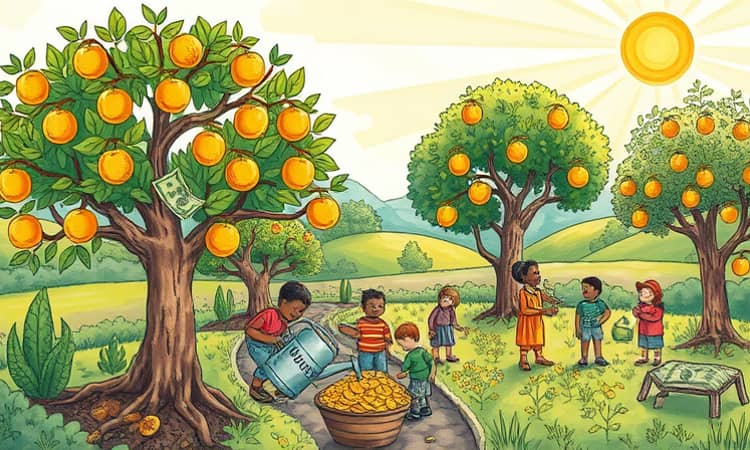
Imagine a vast orchard where each tree symbolizes a person's financial journey, growing from seeds of knowledge into abundance or withering from neglect.
In America, too many orchards lie barren, with only 49% correct answers on literacy tests exposing a deep-rooted crisis.
This stagnation hides a rise in very low literacy to 25%, threatening our collective harvest and future prosperity.
Financial literacy is not just a skill; it is the soil from which wealth and security grow.
Without it, dreams can falter, and opportunities may be lost in the weeds of confusion.
The Barren Soil: A National Crisis in Financial Literacy
Recent data paints a concerning picture of financial knowledge across the United States.
Overall literacy has remained stagnant since 2017, with no significant improvement in basic understanding.
Key areas reveal where knowledge is weakest and strongest.
- Risk comprehension scores only 35-36%, making it the most challenging topic for adults.
- Investing knowledge lags at 44%, hindering long-term financial growth and stability.
- In contrast, debt management is better understood at 58%, offering a foundation to build upon.
This decline is more than numbers; it reflects daily struggles in managing money.
Teens, for example, show a stark lack of confidence, with 74% unsure about their financial futures.
Yet, 73% express a desire to learn, highlighting a critical opportunity for early education.
The P-Fin Index 2025 confirms these trends, with Gen Z scoring lowest at 38% correct.
Varied Trees: Demographic Disparities in Knowledge
Not all trees in the orchard grow equally; demographic factors create significant gaps in financial literacy.
Generational differences are pronounced, affecting how each group approaches money.
- Gen Z struggles the most, with two-thirds answering half or fewer questions correctly.
- Millennials show moderate knowledge at 45-46%, while Baby Boomers lead at 55%.
- Gen X often displays overconfidence, self-rating their literacy higher than actual scores.
Gender disparities persist, with men 62% literate versus women's 52%.
This 10% gap is double the global average, particularly evident in investing where it reaches 15%.
Income levels further deepen these divides, as illustrated in the table below.
This correlation shows that financial education is often a privilege, leaving lower-income individuals more vulnerable.
Other groups, such as Hispanic and Black Americans, face additional barriers, compounded by socio-economic challenges.
Perception versus reality adds complexity, with only 10% self-identifying as illiterate despite low scores.
Lost Harvests: The Cost of Financial Illiteracy
The consequences of low literacy are measured in real dollars and wasted time, impacting individuals and the economy.
In 2023, the total cost to the U.S. was a staggering $388 billion in losses.
Per adult, this translates to an average loss of $1,506, with many facing higher personal costs.
- 48.6% of adults report losing $500 or more in a recent year due to poor financial decisions.
- 14.6% experience losses exceeding $2,500, highlighting severe financial impacts.
- Spikes occur during crises, like the 2020 COVID-19 pandemic, where average losses jumped to $1,634.
Beyond money, time is a precious resource lost.
Low-literacy individuals are 7x more likely to spend 20+ hours weekly on financial issues.
This drains productivity and increases stress, affecting overall well-being.
They are also twice as likely to be constrained by debt and three times as financially fragile.
High literacy, in contrast, links to better outcomes, such as reduced debt and greater resilience.
Cultivating Growth: Practical Pathways to Improvement
Transforming this landscape requires intentional efforts, starting with education and accessible resources.
Youth education is critical, as teens show a strong desire to learn and build confidence.
- Implement financial literacy programs in schools from an early age to instill good habits.
- Use interactive tools, like apps and games, to make learning engaging and practical.
- Focus on strengths, such as saving knowledge at 55%, to build a solid foundation.
For adults, bridging the gap between confidence and actual knowledge is essential.
Targeted workshops and community programs can help address specific needs.
State leaders like Minnesota and Wisconsin, with literacy rates above 34%, offer models for success.
Strategies include improving risk comprehension and promoting long-term investing.
- Encourage regular saving and budgeting to develop consistent financial habits.
- Provide clear explanations of insurance and investment options to demystify complex topics.
- Leverage employer resources and financial institutions to offer support and incentives.
By cultivating knowledge through accessible education, we can nurture growth across all demographics.
Harvesting Prosperity: Vision for a Thriving Future
With improved literacy, the orchard can bloom, yielding benefits that extend beyond mere wealth.
High literacy correlates with better well-being and lower debt levels, fostering personal and economic stability.
Individuals become more prepared for retirement and unexpected financial shocks.
Societally, it promotes equity and reduces the annual multi-billion dollar drain on the economy.
Imagine a future where every person flourishes, making informed decisions with confidence.
- Increased confidence in managing investments and understanding risks.
- Reduced financial stress, freeing up time for personal pursuits and family life.
- A stronger, more resilient economy that benefits everyone, from young adults to retirees.
Cultivating this orchard is a collective effort, requiring commitment from individuals, educators, and policymakers.
Start by planting your own seeds of knowledge today, through reading, courses, or open conversations about money.
Every small step nurtures growth, turning barren soil into a harvest of lasting prosperity and security for generations to come.