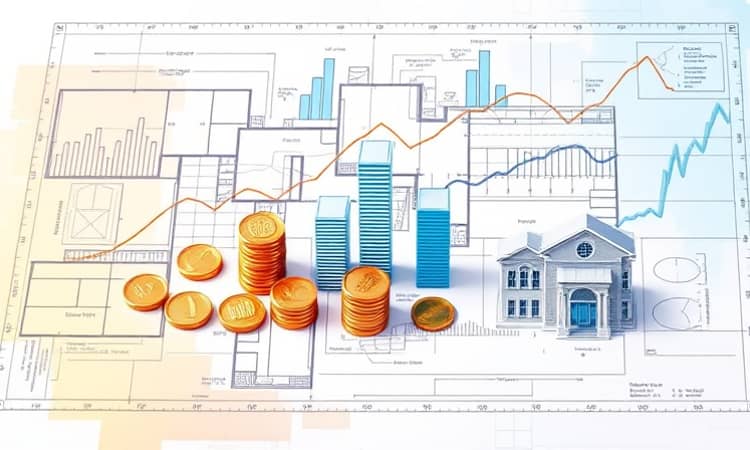
Imagine your financial life as a building, where every decision forms the foundation, walls, and roof of your future security.
Just as an architect designs structures to withstand storms and time, an Asset Architect crafts a robust financial framework that ensures resilience and growth.
This metaphor transforms how we view wealth management, moving beyond simple investments to holistic design.
Foundational Layer: Core Definitions and Roles
At its core, asset management involves expert oversight of portfolios, real estate, and investments for wealthy clients.
It focuses on wealth creation and preservation, handling daily trades and long-term strategies tailored to individual needs.
Private asset management, for instance, caters to families with diverse assets like securities and property.
Asset managers play critical roles in portfolio building and adjustment based on market conditions and risk tolerance.
Their work includes diversification, rebalancing, and fund selection to optimize returns.
Specializations in this field are varied and essential for tailored approaches.
- Hedge and mutual fund management
- Retail, pension, and institutional management
- Niche areas like global startups or ethical investing
These roles ensure that every financial move is strategic and aligned with client goals.
Understanding this layer is the first step toward becoming your own Asset Architect.
Asset Management vs. Comprehensive Financial Planning
While asset management grows assets, it often overlooks the broader financial picture.
Comprehensive financial planning, in contrast, integrates investments with taxes, insurance, and retirement goals.
This distinction is crucial for avoiding costly oversights and building true resilience.
A hybrid model, where firms offer both services, ensures alignment and cost-effectiveness.
This approach maximizes returns while preventing oversights, creating a seamless financial strategy.
Choosing between them depends on your unique circumstances and long-term vision.
Advanced Strategies for Robust Design
To elevate your financial architecture, consider advanced frameworks like Asset Investment Planning (AIP).
AIP is a data-driven system that aligns investments with goals through performance insights and risk assessments.
It leverages predictive analytics to identify high-ROI opportunities and enhance forecasting accuracy.
Key features of AIP include strategic alignment, risk mitigation, and adaptive forecasting.
- Strategic alignment with personal or organizational goals
- Risk mitigation through comprehensive assessments
- Resource allocation based on data insights
- Adaptive forecasting for dynamic market conditions
Another powerful tool is Asset Management Architecture, which streamlines systems for visibility and control.
It uses centralized databases and software integration for real-time tracking of assets.
This ensures efficiency and transparency across all financial operations.
The Financial Planning Pyramid provides a visual hierarchy for building stability from the ground up.
- Base: Establish an emergency fund and eliminate debt
- Protection: Secure insurance and basic estate planning
- Accumulation: Save for retirement and education
- Wealth building: Invest in diversified portfolios
- Peak: Focus on legacy planning and philanthropy
This sequential progress ensures a stable foundation before reaching peak goals.
Visual tools like diagrams can make this concept accessible and actionable for clients.
Practical Implementation: Building Your Financial Future
Becoming an Asset Architect starts with intentional steps to design a resilient financial plan.
First, assess your goals, values, and current financial standing to understand your starting point.
This self-reflection is essential for crafting a strategy that truly reflects your aspirations.
Next, create an integrated plan that combines investments with taxes, insurance, and retirement projections.
This holistic approach aligns every aspect of your finances for better outcomes.
Monitor and adjust this plan regularly for life changes and market shifts, ensuring it remains relevant.
Leverage modern tools to enhance your planning process and visualization.
- Use visualization software like Asset-Map for pyramid views
- Incorporate AIP analytics for data-driven decisions
- Adopt asset management systems for real-time control
Client selection is also key; match services to age and wealth levels for optimal fit.
For example, younger individuals may prioritize planning first, while wealthy clients need both management and planning.
Choose credentialed professionals, such as CFPs or CFAs, to guide you through this journey.
The outcomes of this approach are profound and measurable.
You gain resilience against economic uncertainties and confidence in your financial decisions.
Value is optimized through proactive risk management and life-cycle adjustments.
This method transforms wealth from a mere accumulation into a well-designed legacy.
Embrace the role of an Asset Architect to build a future that withstands any storm.
Start today by evaluating your current strategy and seeking integrated advice.
Remember, true financial security comes from designing, not just accumulating.