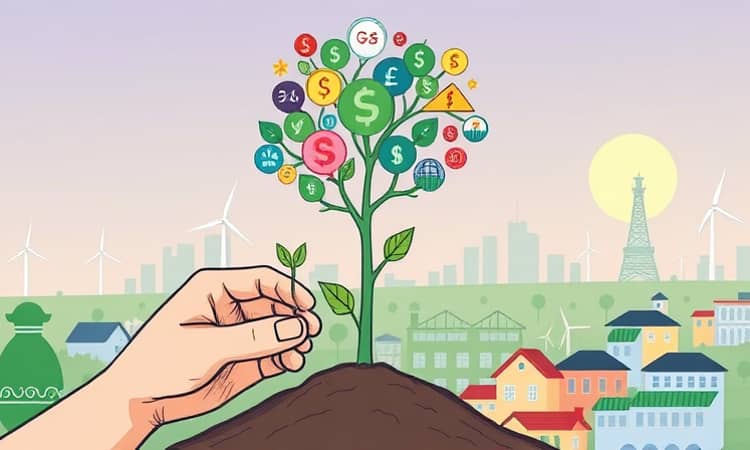
Imagine a world where your financial success not only secures your future but also contributes to a healthier planet and a more equitable society.
Sustainable wealth management makes this vision a reality, blending financial growth with ethical principles.
It transforms investing from a mere numbers game into a powerful tool for change.
By embracing this approach, you can create a lasting legacy that aligns with your deepest values.
Understanding the Core Concepts of Sustainable Investing
Sustainable investing is often framed around ESG criteria, which stands for environmental, social, and governance factors.
These non-financial metrics evaluate how companies operate in areas like climate change mitigation, social equality, and corporate ethics.
ESG investing integrates these factors to enhance long-term resilience and reduce risks.
It differs from traditional methods by prioritizing holistic impact alongside profits.
Key distinctions include impact investing, which generates measurable societal benefits, and sustainable wealth management, which extends beyond investments to include estate planning and family governance.
- ESG investing focuses on environmental, social, and governance criteria for better risk management.
- Sustainable investing incorporates ESG into decisions for competitive returns and positive change.
- Impact investing aims for measurable benefits, such as in clean technology or sustainable agriculture.
- Socially responsible investing (SRI) is often exclusion-based, whereas sustainable investing engages deeply with companies.
This approach ensures that your wealth grows while fostering a better world for future generations.
The Explosive Growth of Sustainable Markets
The global shift toward sustainability is not just a trend; it's a rapidly expanding movement.
In 2020, sustainable assets were valued at over $35.3 trillion, highlighting immense market potential.
Institutions and high-net-worth families are increasingly adopting these strategies to combine financial gains with societal benefits.
For example, Morgan Stanley's Investing with Impact Platform manages nearly $77 billion in client assets, spanning themes like climate action and racial equity.
- Global sustainable assets reached $35.3 trillion in 2020, showing robust growth.
- Morgan Stanley's platform exemplifies institutional commitment with $77 billion in assets.
- This growth is driven by demand for investments that align with personal values and global goals.
These statistics underscore the viability and scalability of sustainable investing in today's economy.
Principles That Guide Sustainable Wealth Management
At its heart, sustainable wealth management is built on core principles that prioritize resilience and values alignment.
These principles differentiate it from conventional approaches, ensuring that your assets endure and thrive over time.
Long-term perspective is crucial, as it focuses on stability and growth beyond immediate gains.
Risk management identifies and mitigates threats, while transparency fosters trust and accountability.
- Long-term perspective plans for prosperity amid economic shifts.
- Risk management enhances portfolio stability through proactive strategies.
- Diversification mixes assets to capture growth across various sectors.
- Impact investing directs capital toward community projects and clean tech.
- Legacy planning ensures values-based estate transfer for positive contributions.
By adhering to these principles, you can build a wealth strategy that is both financially sound and ethically grounded.
Practical Investment Strategies for Sustainable Portfolios
Implementing sustainable investing involves diverse vehicles and methods tailored to your goals.
From stocks and bonds to ETFs and mutual funds, options abound for those seeking to integrate ESG criteria.
Thematic investments focus on specific areas like climate solutions or gender equality, offering targeted impact.
Negative screening excludes harmful industries, while positive selection champions leaders in sustainability.
- Stocks, bonds, ETFs, and mutual funds can be screened for ESG criteria.
- Thematic investments target areas such as climate action or racial equity.
- Direct investments in sustainable companies provide hands-on engagement.
- Tools like climate benchmarks help set net-zero targets for portfolios.
These strategies offer competitive advantages, including potentially lower risk and better long-term returns.
They align your financial objectives with a commitment to positive change, making every investment count.
Embedding Values into Family Legacy and Community Impact
Sustainable wealth extends beyond personal finance to encompass family legacy and community engagement.
It involves creating governance structures that reflect your values and educating future generations on responsible management.
Values-based investment policy statements guide decisions, ensuring alignment with family objectives.
Philanthropy and community initiatives foster cohesion and amplify your impact beyond financial returns.
- Family governance establishes frameworks for decision-making based on shared principles.
- Values-based IPS ensures investments are consistent with long-term goals.
- Philanthropy allows charitable giving that supports stewardship and societal benefits.
- Community engagement builds stronger ties and promotes local development.
This holistic approach connects giving and investing, creating a ripple effect of positive influence.
Getting Started with Sustainable Wealth Management
Beginning your journey toward sustainable wealth requires thoughtful planning and professional guidance.
Work with financial advisors who specialize in ESG to develop customized portfolios that balance financial and sustainable goals.
Platforms from institutions like UBS, JP Morgan, and Morgan Stanley offer diverse solutions across asset classes.
Exercise caution, as ESG investments are not risk-free, and returns can vary; always verify performance and align with your risk tolerance.
- Consult with advisors experienced in sustainable investing for personalized strategies.
- Utilize platforms that offer ESG-focused products and services.
- Research and verify the performance of sustainable investments to ensure alignment.
- Start small with thematic funds or screened portfolios to build confidence.
By taking these steps, you can embark on a path that not only grows your wealth but also contributes to a brighter future.
Sustainable wealth is more than a financial strategy; it's a commitment to investing with purpose.
As you align your assets with your values, you create a legacy that transcends generations.
Embrace this opportunity to make a difference while achieving your financial dreams.
Together, we can build a better tomorrow through mindful and impactful investing.