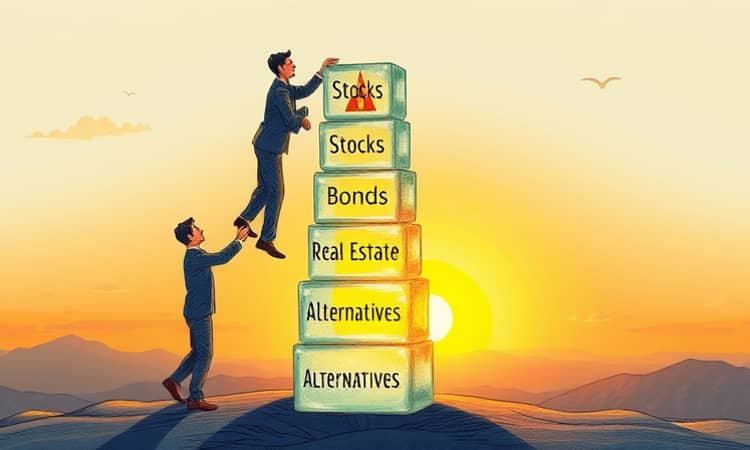
Investing is as much an art as it is a science. Amid shifting markets and uncertain horizons, layering investments offers a path to resilience and growth. By stacking strategies with intention, you create a foundation built to weather storms and capture opportunity.
Our journey will guide you through the core principles of strategic asset allocation, return stacking, and the capital stack. You will emerge equipped with a framework to build portfolios that reflect your aspirations and protect your capital.
Building a Foundation with Strategic Asset Allocation
At the heart of any robust portfolio lies strategic asset allocation (SAA). This method defines target percentages for stocks, bonds, cash, and alternatives, reflecting your risk tolerance, time horizon, and financial goals. Institutions and endowments worldwide trust this approach because it removes emotion and reacts to disciplined rules.
Rather than chasing the latest market trend, methodical, deliberate long-term growth guides each decision. Periodic rebalancing ensures your portfolio returns to its intended mix, selling assets that have outperformed and buying those that lag. Over decades, this discipline often outshines attempts at market timing.
Unleashing Potential Through Return Stacking
Return stacking introduces an additional layer of opportunity. By using capital-efficient derivatives such as futures and swaps, you can maintain your core portfolio while unlocking portable alpha through derivatives. Essentially, each dollar invested can generate exposure greater than one-to-one, freeing capital for alternative returns.
For example, instead of selling equities to invest in a private credit fund, you might use futures to replicate equity exposure at a fraction of the cost. The liberated capital then funds diversifying strategies that can thrive when stocks and bonds face headwinds. The result is a portfolio that blends stability with dynamic return streams.
Understanding the Capital Stack in Real Estate
Real estate investors benefit from the capital stack framework, which layers financing by priority and risk. Each level—from senior debt at the top to common equity at the bottom—carries distinct return profiles and protections.
This hierarchy influences who gets paid first, who bears risk, and where the largest upside lies. Leveraging layers of capital with clear priorities empowers investors to select positions aligned with their risk appetite and return goals.
Crafting a Diversified Portfolio Through Stacking
Diversification through stacking involves more than spreading assets across stocks and bonds. It means combining core and alternative strategies to smooth volatility and capture varied return drivers.
Consider these building blocks:
- Equities for growth and inflation protection
- Bonds for income and stability
- Alternatives—real estate, private credit, commodities—to diversify risk
By layering these components, you create a resilient structure. When one asset class underperforms, others can offset losses and preserve capital.
Rebalancing: The Discipline That Delivers
Rebalancing is a cornerstone of systematic rules-based execution. As markets fluctuate, allocations drift. A 60/40 portfolio could become 70/30 after a bull run. Rebalancing restores the original mix, forcing you to sell high and buy low.
Over time, this disciplined mechanism compounds returns and manages risk. It takes emotion out of decision-making and ensures your portfolio remains aligned with your objectives.
Managing Risk with Precision
Risk management through stacking reduces the impact of any single asset downturn. By spreading investments across uncorrelated strategies, you limit drawdowns and preserve capital during turbulent phases.
Return stacking adds capital efficiency. You maintain core exposure while allocating freed-up capital to diversifying strategies. This layered approach enhances potential returns without altering your fundamental risk profile.
Recapitalization: Strengthening Through Change
Markets evolve, and so should your investments. In real estate, recapitalization—through refinancing or restructuring—can fortify returns and unlock hidden value. Adjusting equity layers or replacing financing sources allows seasoned investors to adapt and thrive.
A Framework for Decision-Making
Every investor’s journey is unique, but a clear framework fosters confidence. Ask yourself:
- What is my position in the capital stack? How much downside protection do I need?
- How can I employ derivatives to enhance capital efficiency?
- Which alternative strategies complement my core portfolio?
Armed with these questions, you can negotiate terms, tailor allocations, and align investments with your long-term vision.
Embracing Discipline and Vision
Building wealth is neither instant nor easy. It demands patience, discipline, and a willingness to learn. Strategic stacks provide a roadmap—layers that reflect your goals, risk tolerance, and time horizon.
Whether you are an individual investor, portfolio manager, or real estate enthusiast, this framework offers clarity. It unites structure with opportunity, risk management with growth potential.
Key Takeaways
- Layering creates stability: Multiple asset classes and financing sources reduce concentrated risk.
- Structure drives returns: How capital is organized matters more than individual picks.
- Discipline beats timing: Systematic rebalancing outperforms market-timing attempts.
- Alignment with goals: Tailor each layer to your objectives and life stage.
- Risk-return tradeoff: Your position in the stack determines safety and upside.
By embracing strategic stacks, you gain a powerful lens through which to view investing. Layer by layer, you build portfolios that endure volatility, capture opportunity, and edge closer to your financial aspirations.