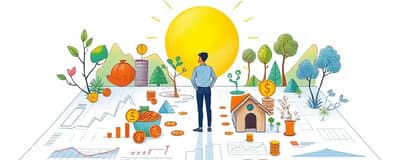
Economic freedom is more than a macroeconomic concept; it's a beacon for personal financial transformation.
By embracing liberty to make economic decisions, you can chart a course toward unparalleled security and growth.
This journey begins with understanding how smart money moves mirror national success, empowering you to build a life free from debt and uncertainty.
In high-freedom nations, individuals thrive with higher incomes and better well-being.
You can replicate this on a personal scale through disciplined strategies and proactive planning.
What is Economic Freedom?
Economic freedom is defined as the liberty individuals have to make economic choices without excessive interference.
It encompasses free markets, secure property rights, and voluntary exchanges.
Key components include rule of law, minimal regulation, and open markets.
This framework fosters innovation, investment, and overall prosperity.
At its core, it's about maximizing opportunity while minimizing barriers.
The Link Between National and Personal Freedom
Countries with high economic freedom, like Singapore and Switzerland, show remarkable outcomes.
They enjoy 6.2x higher average incomes and 7.8x higher incomes for the poorest 10%.
This correlation extends to personal finance through habits that reduce financial friction.
By adopting similar principles, you can enhance your own economic liberty.
Think of it as creating a personal ecosystem of financial efficiency.
Core Strategies for Smart Money Moves
To achieve financial independence, start with actionable steps that align with economic freedom ideals.
These strategies focus on budgeting, saving, cost-cutting, and automation.
Here are essential areas to prioritize:
- Set clear financial goals and timelines.
- Review and track all expenses meticulously.
- Balance income against necessary and discretionary costs.
- Build and maintain an emergency fund.
- Automate savings and payments for consistency.
Each move contributes to a robust financial foundation.
Budgeting: Your Financial Blueprint
Budgeting is the cornerstone of economic freedom at a personal level.
It involves allocating resources efficiently to meet needs and wants.
Use the 50/30/20 budget rule as a guiding framework.
This means dedicating 50% to needs, 30% to wants, and 20% to savings or debt payoff.
Written budgets significantly increase goal achievement by providing clarity.
To implement this effectively, consider the following tips:
- Define 1-3 specific goals, such as saving for an emergency fund.
- Log expenses for a month to identify spending patterns.
- Earmark funds for seasonal expenses like holidays or repairs.
- Use apps or tools to monitor progress regularly.
This proactive approach ensures you stay on track.
Saving and Automation: Building Your Safety Net
Saving is crucial for financial resilience and long-term growth.
Aim to build an emergency fund covering 1-6 months of expenses.
Store this in a high-yield savings account to combat inflation.
Automation transforms saving from a chore into a seamless habit.
Schedule transfers on payday to treat savings as a non-negotiable bill.
Key automation strategies include:
- Set up automatic transfers to retirement accounts like IRAs or 401(k)s.
- Use round-up features to save spare change from purchases.
- Enable autopay for bills to avoid late fees and penalties.
- Automate investments in brokerage accounts for wealth accumulation.
This minimizes the risk of overspending and maximizes consistency.
Cutting Costs: Enhancing Your Financial Liberty
Reducing expenses frees up resources for more meaningful financial goals.
Focus on flexible categories where you can make impactful changes.
This aligns with the principle of minimal personal government intervention in your finances.
By cutting back, you increase your discretionary income for saving or investing.
Here are practical areas to target for cost reduction:
- Utilities: Adjust thermostats and shorten showers to lower bills.
- Groceries: Opt for store brands and budget-friendly recipes.
- Transportation: Use carpooling or public transit to save on fuel.
- Dining out: Limit to twice a week and reduce takeout orders.
- Subscriptions: Cancel unused services to eliminate wasted money.
Small adjustments can lead to significant savings over time.
Preparing for 2026: Advanced Financial Moves
Looking ahead to 2026, specific actions can optimize your financial strategy.
This includes leveraging retirement contribution limits and market conditions.
For example, max out IRA contributions, with catch-up options if you're 50 or older.
Rebalance portfolios after strong market gains to lock in profits and manage risk.
Consider Roth conversions or tax-loss harvesting for tax efficiency.
Prepare for large expenses by saving in advance for items like insurance premiums or car repairs.
Use tools and apps to set named goals, such as "Paris trip" or "new home fund."
These steps ensure you're ready for future challenges and opportunities.
Tracking Progress and Staying Motivated
Consistent monitoring is key to maintaining financial discipline.
Regularly review your budget and savings to identify areas for improvement.
Celebrate milestones, like paying off debt or reaching a savings target.
Use technology to set alerts and track goals in real-time.
This helps you stay motivated and adaptable to changes.
Remember, economic freedom is a journey, not a destination.
By staying engaged, you cultivate lasting financial habits.
This table highlights the tangible benefits of economic freedom, reinforcing why personal smart money moves are so powerful.
Conclusion: Embracing Your Financial Future
Economic freedom at a national level offers a blueprint for personal success.
By implementing smart money moves, you can achieve financial self-reliance and security.
Start today with budgeting, saving, and automation to build a prosperous future.
Remember, every small step contributes to a larger journey toward liberty.
With discipline and planning, you can navigate your way to true economic freedom.