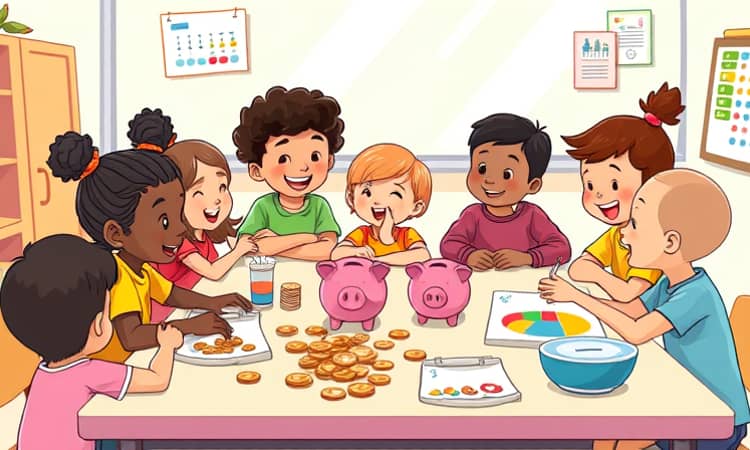
In today’s fast-paced world, financial decisions often come at a young age. Equipping children with monetary knowledge from an early age is no longer optional—it’s imperative. By building money management foundations in childhood, families and schools can shape confident adults ready to navigate economic challenges.
Research links financial literacy early to improved saving habits, higher credit scores, and increased long-term wealth. This article explores the gap in youth financial skills, the benefits of early education, and practical strategies to empower the next generation.
Understanding the Gap
Even though the U.S. often hails itself as a land of opportunity, surveys paint a different picture for young Americans. In the OECD PISA assessment, 22% of U.S. teens lack basic finance skills, placing the nation only around the global average. Leading countries like Canada and Belgium show that higher standards can yield better youth outcomes.
Meanwhile, only 27.2% of teens aged 15–18 score above 70% on personal finance tests, and 74% admit feeling unprepared for financial responsibilities. This disconnect between confidence and competence can lead to costly mistakes—high-interest debt, minimal savings, and missed investment opportunities.
Socioeconomic disparities exacerbate these gaps. Students from lower-income schools perform far worse than peers, perpetuating cycles of inequality. When only 3% of students at resource-limited schools are high performers, the path to economic mobility narrows dramatically.
Why Start Early?
Developmental psychologists agree that ages 5 to 12 are critical for forming lifelong habits. During these years, children absorb principles of cause and effect, reward and consequence. Introducing basic budgeting and saving concepts taps into natural curiosity and sets the stage for complex ideas later on.
Furthermore, financial anxiety can begin before adulthood. With 42% of teens reporting fear about future finances, early education offers relief. Children taught how to plan for small goals—like saving for a toy—develop a sense of agency that translates to bigger ambitions, reducing stress and fostering optimism.
Studies show that youth who learn about money in elementary grades are more likely to open bank accounts, compare prices, and discuss finances openly with peers. These behaviors compound over time, guiding them toward smarter spending decisions and improved long-term security.
Core Concepts to Cover
A truly transformative curriculum balances theoretical knowledge with hands-on practice. Key topics include:
- Budget creation: tracking allowances, gifts, and small earnings
- Saving priorities: emergency funds, short-term goals, long-term aspirations
- Credit basics: understanding loans, interest rates, and FICO scores
- Introductory investing: stocks, bonds, compound interest, and risk
Many young people misunderstand credit. In recent surveys, 80% of teens never heard of or failed to explain FICO scores. Clarifying these concepts early prevents high-interest traps and cultivates responsible borrowing habits.
Additionally, retirement planning—often perceived as “far off”—should not be overlooked. Teaching simple examples of compound growth helps children appreciate the value of patience and consistent contributions, even in small amounts.
Strategies for Parents and Educators
A collaborative approach ensures lessons resonate. Teachers can integrate financial topics into math and social studies, while parents reinforce these ideas at home. Consistency across environments deepens understanding.
Innovative methods include gamified learning, budgeting apps with child-friendly interfaces, and real-world simulations. For instance, setting up a mock store where students earn, spend, and save play money brings concepts to life.
- Allowance frameworks: combining fixed weekly amounts with performance-based bonuses
- Family finance meetings: open discussions on budgeting, saving for vacations, and household expenses
- Goal-tracking charts: visual representations of savings progress for tangible motivation
By linking finances to daily life—like grocery shopping or paying bills—children see the relevance of money management. This practical approach reinforces lessons and promotes real-world application.
Measuring Success and Encouraging Growth
Accountability drives progress. Implement routine check-ins where children update their budgets, review savings, and set new targets. Celebrating achievements, whether small or large, reinforces positive behavior.
Evidence supports this approach. High school students receiving three years of financial education are 40% less likely to be late on payments and boast credit scores 25 points higher than peers. Additionally, multi-generational programs show parents of participating youth improve credit scores by 5%, illustrating a powerful ripple effect.
Tracking these indicators over time validates efforts and helps tailor future instruction to address persistent challenges, such as credit misconceptions or inconsistent saving.
Policy and Community Actions
While individual efforts are vital, systemic support amplifies change. Today, 47 states include personal finance in K–12 standards, yet fewer than half require a standalone course for graduation. Advocacy groups are pushing for stronger mandates and comprehensive, evidence-based curricula.
Community partnerships can fill gaps. Libraries, youth centers, and local banks often sponsor workshops and family events. Grassroots organizers should liaise with school boards to secure funding and integrate volunteer-led sessions into school calendars.
Strong policy frameworks not only ensure access but also guarantee consistency of quality. Advocates argue for multi-year, hands-on programming rather than short, isolated lessons, ensuring skills evolve alongside students’ cognitive abilities.
Inspiring a Generational Shift
Imagine a classroom where children compare stock prices, debate the merits of credit cards, and create mini-entrepreneurial ventures. These experiences cultivate confidence and creativity, driving economic innovation from a young age.
Take the story of a fifth grader who, after learning budgeting basics, saved for a community garden project. Her success inspired peers, sparked conversations at home, and led to a neighborhood initiative—demonstrating how early lessons can blossom into community transformation.
By instilling a growth mindset around money, we invite children to dream without financial constraints. This shift not only benefits individuals but also strengthens communities, fueling a more resilient and equitable society.
Take Action Today
Now is the time for parents, educators, and policymakers to unite. Here are actionable steps you can take immediately:
- Introduce age-appropriate finance lessons at home, leveraging everyday activities.
- Advocate for mandatory personal finance courses in local school districts.
- Partner with community organizations to host interactive workshops.
Every small conversation about money, from counting coins to planning savings goals, builds a foundation. Let’s commit to nurturing financially savvy youth who will drive positive change in their communities and beyond.
A Smart Investment in Our Future
Teaching financial literacy early is more than an academic exercise—it’s an investment in human potential. By empowering children with knowledge, we equip them to make informed choices, seize opportunities, and weather economic storms with confidence.
As parents, educators, and advocates, our combined efforts can ensure that the next generation inherits not just assets, but the wisdom to manage and grow them. Let’s plant the seeds of financial understanding today and watch as our children reap the benefits for a lifetime.