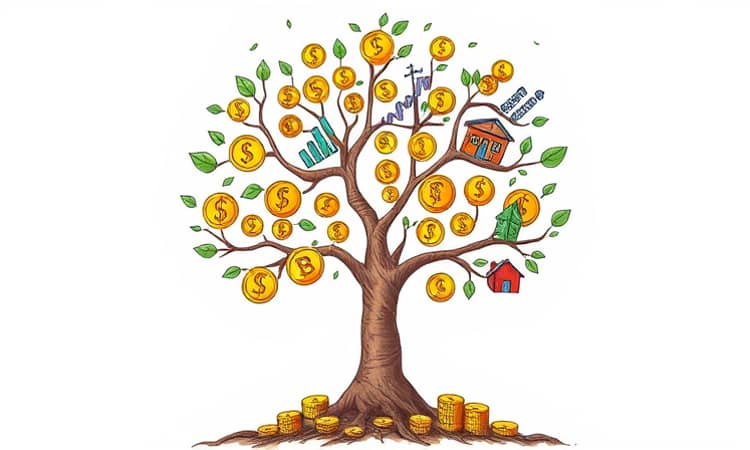
Building a portfolio that earns you money while you sleep is a transformative goal. This playbook guides you through proven strategies to generate sustainable cash flow.
Understanding Passive Income
Passive income is money earned with little to no ongoing active effort after an initial investment of time or capital. Unlike active income, where you trade hours for dollars, passive streams continue delivering returns long after you’ve set them up. However, beware: there is no 100% effort-free, risk-free income. Every strategy demands upfront work, ongoing monitoring, and prudent risk management.
Successful passive investing balances risk, return, liquidity, and effort. Generally, lower effort and volatility mean lower returns, while high-yield channels often carry greater risk.
Step-by-Step Framework to Build Your Portfolio
This playbook lays out a clear process to design your ideal mix of passive income sources:
- 1. Clarify goals and time horizon
- 2. Assess your risk tolerance
- 3. Select a diversified mix of streams
- 4. Automate and implement
- 5. Review performance and rebalance
Following these steps helps you stay disciplined and aligned with your financial objectives, whether saving for retirement or funding lifestyle goals.
Core Passive Income Vehicles
Below are the six main pathways to build cash flow. Each offers a distinct balance of yield, risk, and liquidity.
1. Cash & Cash-Equivalent Investments
High-yield savings, money market accounts, and CDs represent your foundation layer passive income. You deposit cash and earn interest with virtually no management.
Pros:
- Extremely easy setup
- High liquidity for emergencies
- FDIC/NCUA insurance protection
Cons:
- Yields often below inflation
- Interest taxed as ordinary income
2. Bonds and Bond Funds
When you buy bonds, you lend money and receive periodic coupon payments. Bond mutual funds and ETFs pool dozens or hundreds of bonds, offering instant diversification.
Bonds sit in the portfolio’s income and stability layer. Government Treasuries are ultra-safe, while corporate and municipal debt can boost yields at modest risk.
3. Dividend Stocks
Dividend-paying companies share profits with investors, often quarterly. Many blue-chip firms raise payouts annually, nurturing a growing income stream that can outpace inflation over time.
Risks include market volatility and potential dividend cuts in downturns. But you also benefit from capital appreciation when stock prices rise alongside payouts.
4. Dividend Index Funds and ETFs
For those who prefer set-and-forget passive income, funds tracking dividend-focused indices are ideal. They handle stock selection, diversification, and distribution, so you simply buy shares and collect dividends.
5. REITs (Real Estate Investment Trusts)
REITs pool real estate assets—from apartments to warehouses—and distribute most income as dividends. They combine real asset exposure with stock-like liquidity.
Leverage can amplify yields but also increases sensitivity to interest-rate changes. Choose between individual REITs or diversified REIT ETFs based on your comfort with company-level risk.
6. Direct Rental Property
Owning rental homes or commercial spaces offers significant recurring income plus potential tax perks like depreciation. It can serve as an inflation hedge if rents and property values rise.
However, this strategy demands active oversight—tenant screening, maintenance, and dealing with vacancies. Consider property management services if you seek a more hands-off stance.
Review and Rebalance: Keeping Your Playbook Sharp
Once you’ve built your mix, automation is key. Set up regular contributions to your investments and reinvest dividends when possible. Periodically:
- Check each stream’s performance vs. your targets
- Adjust allocations to maintain your desired risk profile
- Harvest tax losses and shift assets into tax-advantaged accounts
This systematic approach to rebalancing ensures you don’t drift into unintended risk levels, and it compounds your gains over the long haul.
Conclusion: Your Passive Income Journey Starts Today
The path to financial freedom is paved with consistent, well-chosen investments. By combining high-yield savings, bonds, dividends, REITs, and rental properties, you create a durable multi-layered portfolio that works while you focus on what matters most.
Begin now: define your goals, assemble your mix, automate your contributions, and watch your passive streams grow into a reliable source of lifelong income.