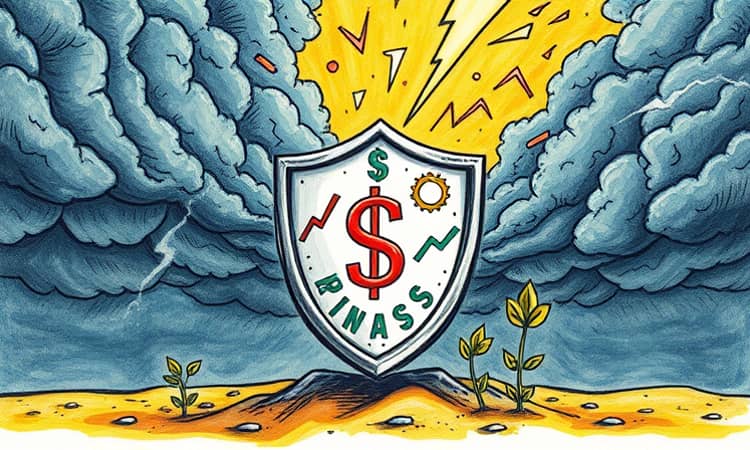
As global markets shift and uncertainties mount, investors must adopt both resilience and agility. By combining time-tested tactics with innovative tools, you can build a defense that weathers any economic storm.
Preparing for Uncertain Times
The economic outlook for 2026 points to growth flattening versus 2025, with pockets of strength in the US offset by moderating migration and fading tailwinds. Central banks have room for cautious rate cuts over the coming quarters, and government stimulus packages are boosting liquidity.
Meanwhile, an AI-driven productivity upswing offers a counterbalance to labor pressures, but systemic risks loom large: inflation volatility, elevated equity concentration—Nvidia alone makes up nearly 8% of SPY—and geopolitical trade frictions.
Core Portfolio Adjustments
At the heart of portfolio defense is rebalancing. Over the past decade, many 60/40 allocations drifted to more than 80% equities. A disciplined rebalance restores your target weights and manages total exposure, not just individual holdings.
Within equities, targeted diversification matters. US large-cap growth has outperformed, but it carries concentration risk. Complement your core positions with:
- International stocks to capture 2025’s revival and potential upside
- Value and small-cap equities as a counterweight to mega-cap tech
- High-dividend sectors in utilities, healthcare, consumer staples, and financials
Turning to fixed income, the end of quantitative tightening and prospects for rate cuts favor adding duration. Consider extending maturities or boosting exposure to:
- Investment-grade corporate credit via active bond ETFs
- Front-end Treasuries and high-yield bonds for incremental income
- Emerging market debt to capitalize on $40–50 billion of anticipated inflows
Advanced Hedging Techniques
When downside risks spike, a pre-defined equity cut on recession signals—often called a “red button” hedge—can preserve liquidity. Institutional investors may slash equity allocations by up to 40% when leading indicators trigger.
For convexity and asymmetric protection, tail-risk strategies and defensive structured ETFs can complement core hedges. By broadening assumptions beyond equities and rates to include currency and carry trades, you enhance your buffer.
Leveraging Alternatives and Diversifiers
In volatile environments, low-correlation assets stabilize returns. Real assets and commodities such as gold and oil serve as inflation hedges and value stores. Likewise, private equity and multi-strategy hedge funds smooth equity drawdowns over the long run.
Active ETFs in private assets have grown rapidly—46% AUM expansion since 2020—offering liquid access to alternative return streams. Even a small allocation to cryptocurrencies like Bitcoin or Ethereum may provide diversification benefits, albeit with elevated volatility.
Implementing Your Plan
Begin with a clear assessment of your risk tolerance, time horizon, and financial goals. Map out an allocation framework that aligns to each objective, whether growth, income, or capital preservation.
Next, select vehicles that balance cost, liquidity, and transparency: passive index funds for core exposures, active ETFs for credit and alternatives, and structured products for tailored hedges. Always maintain a step-by-step allocation roadmap to guide each deployment.
Finally, schedule regular reviews—quarterly or semiannual—to compare performance against benchmarks and revisit assumptions. Make small disciplined tweaks maintain stability rather than wholesale overhauls triggered by market noise.
Embracing a Long-Term Mindset
Historic bull markets can tempt investors to chase momentum. Instead, prioritize discipline over prediction. Resist the urge to overload on high-flying sectors and keep your holistic balance sheet view front of mind, integrating both personal and business liquidity strategies.
Scenario planning—considering both bullish continuations and recessionary downturns—empowers you to act swiftly when conditions shift. By defining your thresholds in advance, you remove emotion from the decision-making process.
Conclusion
Economic storms are inevitable, but with thoughtful preparation and rigorous execution, you can transform volatility into opportunity. Embrace diversification, maintain disciplined rebalancing, and weave in hedges and alternatives for true resilience.
When the winds of change blow hardest, a portfolio built on these pillars will stand strong, guiding you toward long-term prosperity.