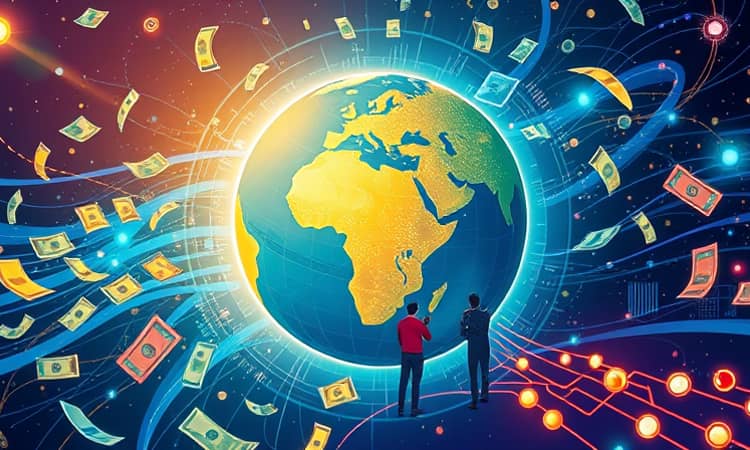
In an era defined by rapid technological change, trade tensions, and evolving fiscal landscapes, the global economy in 2026 stands at a pivotal crossroads. This article explores how nations and businesses can tap into expansionary fiscal policies and monetary support and AI-driven investment surge across sectors to sustain and amplify growth. Drawing on forecasts, regional insights, and the powerful synergy between policy and technology, we chart a course for enduring momentum.
Global Outlook for 2026
Analysts project that global GDP will expand by 2.7 to 3.3 percent, slightly below the pre-pandemic average of 3.2 percent but demonstrating resilient momentum amid challenges. Fiscal and monetary easing, coupled with steady consumer spending, underpins this moderated yet durable trajectory.
According to Deloitte, advanced economies may slow by 0.4 percent due to tariffs, while emerging markets like Argentina and Mexico rebound strongly. The IMF’s upward revision to 3.3 percent underscores the impact of tech investment. PwC and UN DESA forecasts cluster around 2.7 percent, reflecting subdued investment alongside policy support. Overall, these figures highlight a global economy adapting to headwinds yet poised for growth.
Regional Growth Dynamics
Growth is uneven across geographies, influenced by domestic policies, demographic trends, and external pressures. Advanced economies are forecast at 1.1 to 2.6 percent, while emerging markets may achieve between 4 and 7 percent expansion.
- United States: Projected growth of 1.9 to 2.6 percent, driven by tax cuts, fiscal and monetary easing, and soaring AI infrastructure investment. Consumer resilience across income groups remains a key supporting pillar.
- Eurozone: Expansion of 1.1 to 1.4 percent, buoyed by private consumption and wage recovery, counterbalancing trade tensions and tariffs impacts and geopolitical strains.
- China: Growth of 4.5 to 4.6 percent amid a property sector downturn and weaker exports, requiring a push for stronger domestic demand and currency stability.
- India & South Asia: Exceptional performance at 6.6 to 7.8 percent, propelled by consumption-led growth and booming high-tech exports.
- Latin America & Africa: Mixed outcomes – robust rebounds in Argentina (3.5%) and Mexico (1.6%), contrasted with headwinds from high debt levels in emerging economies, climate risks, and political volatility.
Financial Engines Powering Momentum
Key policy measures and market forces serve as the primary catalysts for growth in 2026. Understanding and coordinating these drivers is crucial for policymakers and business leaders alike.
- Fiscal and Monetary Easing: Rate cuts to near 3 percent in the US, full expensing for capital investment, and targeted fiscal packages in Japan exemplify coordinated support.
- AI and Tech Infrastructure: Massive deployment of data centers, digital networks, and semiconductor capacity anchors new business investment and productivity gains.
- Resilient Consumer Spending Patterns: Global consumption remains strong, with luxury and value retail growth in the US and real wage gains in Japan underpinning demand.
- Private investment surge driven by capacity expansions: Nearshoring in Mexico, energy and mining projects in Argentina, and industrial capacity expansions in emerging Asia drive capital expenditure.
Risks and Headwinds to Watch
Despite promising momentum, several challenges could derail growth trajectories if left unchecked. Identifying and mitigating these risks is essential for sustaining positive outcomes.
- Trade tensions and tariffs: Ongoing US tariffs and geopolitical disputes threaten export-oriented sectors and global supply chains.
- High debt levels in emerging economies: Fiscal strains in developing markets and overextended budgets in advanced economies could limit policy flexibility.
- Persistent inflation pressures across major markets: Core inflation above 2 percent, driven by food and energy costs, may erode real income gains and consumer confidence.
- Geopolitical instability and regional conflicts: Conflicts and regional frictions in Western Asia and Africa pose risks to growth and investment flows.
- Structural reforms and deregulation: Property sector challenges in China and capacity overhang in industrial commodities require targeted policy change.
Strategies for Sustained Growth
To capitalize on existing momentum and foster long-term resilience, policymakers and business leaders should pursue a coordinated strategy that blends short-term stimulus with deep structural change.
First, governments must continue expansionary fiscal policies and monetary support while building fiscal buffers to navigate future downturns. This means balancing tax incentives for investment with prudent debt management.
Second, accelerating AI-driven investment surge across sectors can boost productivity and open new markets. Public-private partnerships for digital infrastructure, research grants for emerging technologies, and workforce reskilling initiatives are all critical components.
Third, maintaining consumer confidence through real income support and wage growth will anchor demand. Labor market policies that promote inclusion and social safety nets can help mitigate inequalities and strengthen domestic consumption.
Fourth, targeted structural reforms that liberalize markets, streamline regulations, and enhance trade integration can unlock latent potential in both advanced and emerging economies. Initiatives like USMCA reviews, regional trade agreements in Asia, and debt transparency frameworks in Africa exemplify this approach.
Finally, international cooperation remains indispensable. Coordinated efforts to manage climate risks, address supply-chain vulnerabilities, and harmonize regulatory standards will ensure that growth momentum translates into sustainable development gains across borders.
As PwC notes, “Resilience in 2026 isn’t automatic—it relies on AI-driven investment, supportive fiscal policy, and structural reforms.” The IMF echoes this imperative: “Technology investment will offset trade policy headwinds.” By aligning policy levers with technological innovation and consumer empowerment, the global economy can harness the full power of its monetary momentum.