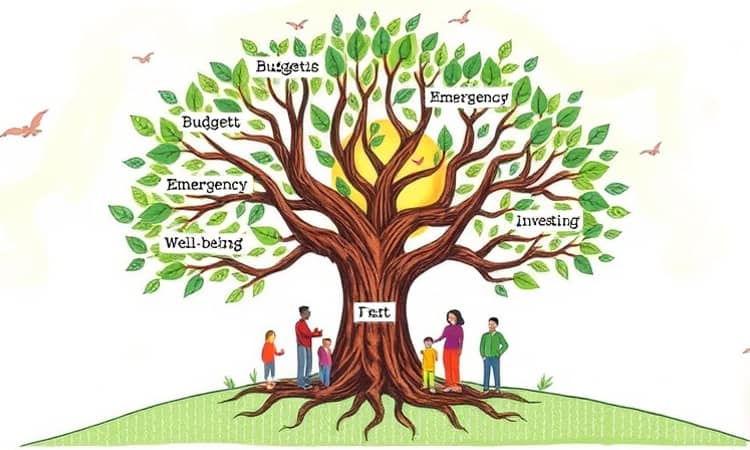
In today’s complex world, true wealth extends beyond the size of your bank balance. Financial wellness is a comprehensive state that integrates objective money management with subjective well-being, empowering individuals to feel secure, in control, and free to pursue their dreams.
This article explores the multifaceted nature of financial wellness, offers practical steps for building resilience, and inspires a mindset that connects money management with overall life satisfaction.
Understanding Financial Wellness
At its core, the Consumer Financial Protection Bureau defines financial well-being as having financial security and financial freedom in both the present and the future.
The CFPB outlines 4 elements of financial well-being: present security, future security, present freedom, and future freedom.
Present security means control over day-to-day finances, enabling you to meet monthly obligations with confidence.
Future security reflects the capacity to absorb a financial shock, such as unexpected medical bills or job loss.
Present freedom offers financial freedom to make choices that enrich your daily life—traveling, learning, or spending time with loved ones.
Future freedom ensures you stay on track to meet long-term goals like retirement, home ownership, or higher education.
Other authorities echo this holistic view. Annuity.org emphasizes the ability to comfortably manage current obligations and plan for emergencies and future goals. MX describes wellness as the comfortably manage one’s finances and build stronger habits. Vanguard stresses budgeting, debt reduction, saving, and informed investing as pillars of sustainable prosperity.
The Pillars of Holistic Financial Wellness
- Cash-flow & Spending (Present Control)
- Debt Management
- Safety Nets & Resilience
- Saving & Long-Term Planning
- Investing & Wealth Building
- Financial Literacy & Behavior
- Psychological & Emotional Well-Being
- Relationships & Social Dimension
- Physical & Mental Health Links
Each pillar is interdependent, creating a foundation for lasting financial health. By nurturing every aspect, you reduce stress, bolster resilience, and gain the freedom to live on your own terms.
Cash-flow & Spending is the starting point. Track your income and expenses with a budget aligned to your values. Living within your means fosters stable day-to-day finances and prevents the cycle of paycheck-to-paycheck living.
Debt Management focuses on eliminating high-interest obligations. Paying off credit cards and loans frees up resources for saving and investing, while improving your credit score and reducing anxiety over mounting bills.
Safety Nets & Resilience require an emergency fund of three to six months’ expenses. Coupled with appropriate insurance and diversified income streams, this buffer shields you from financial shocks and preserves your peace of mind.
Saving & Long-Term Planning involves setting aside funds for goals like retirement, education, or major purchases. Automating contributions ensures consistent progress and keeps you motivated by celebrating milestones.
Investing & Wealth Building moves you beyond mere saving. By adopting a balanced portfolio and focusing on a long time horizon, you harness compound growth. Tracking net worth over time reveals your true progress toward generational wealth.
Financial Literacy & Behavior empowers you to make informed decisions. Understanding key concepts—budgeting, credit, compounding, and risk—builds confidence. Cultivating positive habits like on-time bill payment and regular investing cements your path to wellness.
Psychological & Emotional Well-Being recognizes that financial stress impacts mental health. Reducing money anxiety improves sleep, concentration, and relationships. A sense of control fosters optimism and resilience in the face of uncertainty.
Relationships & Social Dimension highlights the role of financial harmony in families and partnerships. Transparent communication about goals, budgets, and shared responsibilities strengthens trust and reduces conflict.
Physical & Mental Health Links underscore the connection between money and well-being. Financial strain can lead to stress-related ailments, while improved wellness often correlates with better health outcomes and increased productivity.
Current Landscape: Statistics and Trends
Despite broad awareness, many households remain fragile. The Federal Reserve reports 73% of U.S. adults are “doing okay” or “living comfortably,” but 27% struggle to make ends meet. The World Bank notes 79% of adults globally hold financial accounts, yet access alone does not guarantee wellness.
Average American credit card debt sits at $6,501 in credit card debt, signaling reliance on high-cost borrowing. Meanwhile, 38% of workers withdraw from retirement savings to cover emergencies, with Gen Z leading at 42% using retirement funds for debt relief.
Workplace surveys reveal 66% of employees are stressed about finances, and 76% feel living costs outpace wages. A perception gap exists: only 44% of employers believe they fully support workers’ financial needs, while just 36% of employees agree.
Practical Strategies for Lasting Wellness
Begin by establishing a realistic budget. Identify non-essential spending you can trim and redirect into savings or debt repayment. Use tools or apps to automate tracking and stay accountable.
Prioritize high-interest debt. Consider the avalanche or snowball method—either tackle the highest rates first or pay off smaller balances to build momentum. Refinance or consolidate loans when feasible.
Build your emergency fund incrementally. Even small, consistent deposits foster momentum and protect against setbacks. Aim to progressively increase the target as income grows.
Automate contributions to retirement and investment accounts. Out of sight, out of mind: automate deposits to benefit from dollar-cost averaging and compound growth.
Invest in your financial education. Read reputable resources, attend workshops, or seek guidance from a certified financial planner. Knowledge reduces fear and empowers confident decision-making.
Address the emotional side. Practice mindful spending to align purchases with values, and regularly review progress to celebrate achievements. Open honest dialogues about money with family to foster shared goals and mutual support.
Embracing a Holistic Mindset
True financial wellness transcends spreadsheets. It is grounded in a balanced life where money serves your well-being, not controls it. Cultivating gratitude, focusing on relationships, and nurturing physical and mental health amplify the benefits of sound money habits.
Recognize setbacks as learning opportunities. Economic downturns, career transitions, or unplanned expenses are inevitable. Building resilience through diverse income streams, continuous learning, and a supportive community ensures you recover stronger.
Conclusion: The Path Forward
Achieving holistic financial wellness is an ongoing journey, not a one-time event. By integrating effective money management with emotional well-being, you unlock a life of choice, security, and fulfillment.
Begin today: define your values, set clear goals, and commit to small, consistent actions. As your financial health improves, you’ll discover greater peace of mind, deeper relationships, and the freedom to live your best life.