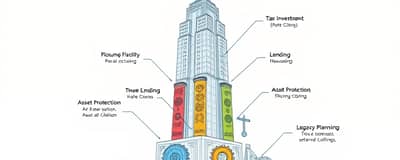
In an age of rapid change and emerging technologies, mastering proactive, adaptable planning is more critical than ever. Financial foresight empowers individuals and families not only to weather uncertainties but also to turn them into opportunities for growth, legacy building, and shared prosperity. By weaving together clear objectives, smart tax strategies, robust forecasting methods, and an eye on 2026 trends, you can create a resilient roadmap that aligns with your deepest values and long-term aspirations.
Defining Success and Goal-Setting
Success begins with clarity. Before diving into numbers, ask yourself: What do I want my wealth to accomplish? Whether it’s securing multi-generational support, funding philanthropic passions, or preserving a family business, your answers shape every decision.
Adopt values-aligned objectives and revisit them annually. Life events—retirement, education costs, or major purchases—inevitably shift priorities. A consistent rhythm of reviews ensures your plan stays relevant and dynamic.
- Use scenario analyses to test outcomes under varying market and personal conditions.
- Schedule quarterly financial reviews to reinforce long-term thinking habits.
- Map objectives to specific milestones: savings targets, debt reduction, charitable goals.
Tax and Estate Planning Strategies
Integrate tax planning from the outset. Compare your portfolio’s liquidity, cash flow, and risk profile against your goals. Anticipate life changes—liquidity events or family growth—and adjust your strategy accordingly.
Maximize contributions to tax-advantaged accounts: 401(k)s, IRAs (Traditional and Roth), HSAs, FSAs, and 529 plans. Stay alert to IRS updates on deduction limits and tax brackets.
For 2026, consider:
- Accelerating deductions and Roth conversions before bracket shifts.
- Tapping the temporarily quadrupled SALT deduction cap of $40,000.
- Positioning assets across taxable, tax-deferred, and tax-free accounts for optimized after-tax returns.
Estate planning demands regular check-ins too. Update wills and trusts, protect heirs from unnecessary taxes, and use donor-advised funds to lock in 2025 charitable benefits with ongoing giving flexibility. Don’t forget quarterly estimated taxes, with a June 15 due date for mid-year payments.
Investment and Portfolio Management
Your portfolio is the engine that drives your plan. Align allocations with your time horizon, risk tolerance, and broader economic outlook. As interest rates and market trends evolve, rebalancing ensures you don’t stray from your intended path.
In 2026, diversify further by incorporating values-based options—ESG funds or impact investments that resonate with your principles. Explore a bucket strategy for retirement: keep short-term cash reserves liquid, while committing long-term assets to growth opportunities.
Tax-smart tweaks can boost performance: shift to low-cost index funds and ETFs, or add municipal bonds if you fall in a high tax bracket. Keep your balance sheet healthy—strike a balance between growth and liquidity, and manage debt prudently amid fluctuating rates. Finally, review insurance coverages—life, health, disability, and property—to safeguard against unexpected setbacks.
Forecasting and Scenario Planning
Robust forecasting blends art and science. From percent-of-sales models to Delphi techniques, each method offers unique insights. Leverage multiple approaches to build a comprehensive view of revenue, expenses, and cash flow under varied conditions.
- Maintain flexible, rolling forecasts updated with real-time data.
- Gather collaborative inputs across sales, marketing, and operations.
- Use scenario planning with best-case, worst-case, and base-case models.
- Employ AI-driven tools for probabilistic outcome simulations.
- Detect and correct for bias through automated analytics.
- Leverage expert consensus via the Delphi method when data is limited.
Retirement, Healthcare, and Income Strategies
As longevity rises, so do the costs of living, travel, and healthcare. Aim to increase savings with multi-decade tools and take full advantage of 2026 contribution limit hikes. Draft a retirement policy statement detailing your target income—combining pensions, Social Security, and withdrawals—and align it with your spending rate.
Healthcare demands its own plan. Fund an HSA, evaluate long-term care insurance, and review potential out-of-pocket expenses each September. Secure guaranteed income sources—annuities or indexed products—for essential lifetime cash flows, and strategize Social Security claiming to maximize benefits.
2026 Trends and Economic Context
The next year brings exciting innovations and persistent challenges. AI-powered analytics will revolutionize predictive modeling, while multidisciplinary teams harness autonomous agents to monitor global risks—from tariffs to supply chain disruptions. Expect modest and uneven growth, with high interest rates and fiscal imbalances testing resilience.
Investors should embrace volatility as opportunity, diversifying into private markets and early-stage ventures where risk premium remains attractive. In philanthropy, values-driven giving aligns impact with tax efficiency, especially amid substantial deduction changes. Finally, safeguard personal privacy when planning sizable gifts to protect future generations.
Action Timeline for Lasting Success
- Year-Start: Review goals, maximize tax-advantaged accounts, finalize Roth conversion decisions.
- Mid-Year: Submit estimated taxes by June 15 and reassess cash flows.
- September: Reevaluate long-term care needs and healthcare projections.
- Year-End: Update estate plans, reallocate portfolios, check insurance, and prepare liquidity for the new year.
By embedding foresight into every financial decision, you transform uncertainty into strategic advantage. With clear goals, tax-efficient structures, agile investments, and data-driven forecasts, you’ll build a legacy that withstands change and uplifts generations to come. Start planning today to ensure a more secure, purpose-driven tomorrow.