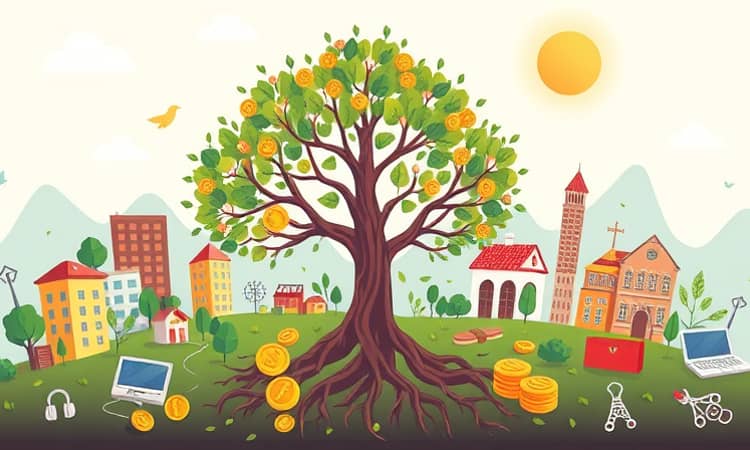
In an era of economic uncertainty, the traditional reliance on a single paycheck is no longer enough to ensure financial peace of mind.
Diversifying your income streams offers a powerful antidote to instability, allowing you to build a more resilient and prosperous future.
This strategy is not reserved for the wealthy; it is an accessible path for anyone seeking greater control over their finances.
By embracing multiple sources of revenue, you can reduce vulnerability to job loss and market fluctuations.
It opens doors to faster wealth accumulation and the freedom to pursue passions without financial fear.
The Power of Multiple Income Streams
The benefits of income diversification are profound and far-reaching.
It enhances your financial stability by spreading risk across different sources.
This approach can lead to accelerated wealth building, helping you achieve goals like early retirement or debt payoff sooner.
Moreover, it provides a safety net during economic downturns, such as recessions or rising costs.
Statistics highlight its growing importance in today's world.
- Nearly half of Americans have at least two income streams.
- Multimillionaires often average seven different sources.
- 65% of high earners maintain three streams, with 45% having four.
- 7.8% of U.S. workers hold multiple jobs, especially in healthcare and food services.
- 33% of side hustlers rely on them for basic living expenses.
These numbers underscore a shift towards proactive financial management.
Diversification is not just a trend; it is a necessity for long-term security.
Why Relying on One Income is Risky
Putting all your eggs in one basket is a precarious financial strategy.
A single income source leaves you vulnerable to layoffs, industry shifts, or unexpected expenses.
This dependence can force drastic lifestyle cuts in times of crisis.
In contrast, diversification offers flexibility and options without compromising your quality of life.
It empowers you to navigate challenges with confidence and resilience.
Categories of Income Streams
Income streams can be broadly divided into active and passive categories.
Active income requires ongoing effort, such as from jobs or side hustles.
Passive income, on the other hand, involves minimal effort after initial setup, like from investments or rentals.
Balancing these types helps manage risk and reward effectively.
Here are key active streams to consider:
- Full-time job: A stable base; use your salary to fund other streams rather than just seeking raises.
- Side hustles and gigs: Augment your income; many use these for essential expenses.
- Agent roles (e.g., in insurance or real estate): Flexible options with low startup costs, earning commissions and bonuses.
- Renting assets: Utilize spare rooms, cars, or tools through platforms like Airbnb or Turo without incurring new debt.
For passive streams, prioritize options that align with long-term growth, especially for 2025-2026.
The table below outlines top passive income streams:
Combining these streams, such as rentals with dividends and online businesses, creates a balanced portfolio.
This diversification helps mitigate risks while maximizing opportunities for wealth accumulation.
Tax Management for Multiple Streams
Managing taxes becomes more complex with multiple income streams.
It is crucial to set aside 25-30% of non-W-2 income for quarterly IRS payments to avoid penalties.
Effective strategies include meticulous tracking and seeking professional advice.
- Track everything: Use software to monitor income and expenses; separate entities for rentals or businesses can optimize deductions.
- Understand tax forms: Expect 1099-MISC for self-employment; different rules apply to passive streams like dividends.
- Leverage deductions and credits: Claim business, rental, or investment costs; use retirement accounts like IRAs for tax advantages.
- Consult professionals: Yearly or mid-year reviews with tax advisors ensure compliance and optimization.
Proper tax management protects your earnings and enhances overall financial health.
Practical Steps to Build Your Income Streams
Starting the journey to diversify income may seem daunting, but breaking it down into manageable steps makes it achievable.
- Inventory your finances: Assess current income and expenses to identify areas for savings and investment.
- Start small: Use earnings from your job to fund low-risk passive streams, then gradually add active ones like agent work.
- Diversify thoughtfully: Align streams with your personal goals and risk tolerance, considering trends for 2026 like dynamic sector strategies.
- Avoid common mistakes: Do not overextend yourself; focus on sustainable setups that grow over time.
- Monitor and adjust: Regularly review your streams to ensure they remain aligned with economic shifts and personal objectives.
This proactive approach fosters steady progress towards financial independence.
Navigating Challenges and Risks
While diversifying income offers many benefits, it is not without challenges.
Common pitfalls include tax complexities and the burden of record-keeping.
Volatility in high-risk streams, such as certain investments, requires careful management.
Over-diversification can dilute focus, making it harder to achieve significant growth.
Even passive streams demand upfront effort to set up and maintain.
- Tax pitfalls can lead to penalties if not managed properly.
- Market volatility requires a balanced approach to risk.
- Initial setup for passive income often involves significant time and resources.
- Balancing multiple streams necessitates ongoing attention and adjustment.
By acknowledging these risks, you can plan effectively and build a robust financial strategy.
Embrace the journey with patience and persistence for lasting success.