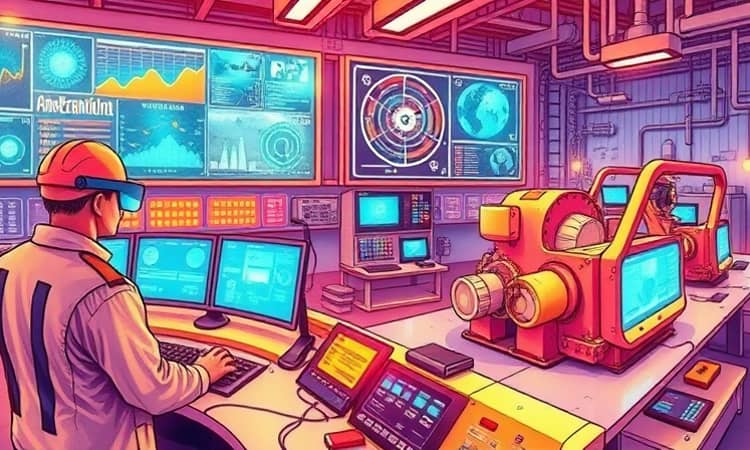
In today’s rapidly evolving industrial and digital landscape, assets represent more than just equipment and infrastructure—they are strategic levers that drive growth, innovation, and resilience.
What is Intelligent Asset Management?
Intelligent Asset Management (IAM) represents a profound shift in how organizations care for and derive value from their assets. Moving beyond maintenance schedules, IAM harnesses a data-driven, technology-enabled approach to managing every lifecycle stage—from procurement and operation to end-of-life recycling.
By integrating real-time sensor data with enterprise systems, IAM creates a continuous feedback loop. Industrial equipment, laboratory instruments, and digital infrastructure become “intelligent assets” capable of self-diagnosis and self-reporting.
This transformation is supported by leading experts. According to the IBM Think report, “Intelligent asset management puts data and AI to work to optimize critical asset performance and automate enterprise operations.” This insight underscores how IAM fuses OT and IT to unlock new efficiencies.
Key Technologies Driving Transformation
At the heart of IAM lies a suite of advanced technologies. Each contributes a vital capability to the overall ecosystem:
- Internet of Things (IoT) sensors continuously monitor equipment health, environmental conditions, and usage patterns
- Artificial Intelligence and Machine Learning models analyze massive datasets for anomaly detection, failure prediction, and prescriptive recommendations
- Cloud Platforms offer elastic compute power and secure data storage, facilitating real-time operational data with business systems integration
- Digital Twins and Simulation create virtual replicas of assets, enabling “what-if” analyses and scenario planning
- Mobile Apps and Augmented Reality empower technicians with on-site guidance, remote expert collaboration, and instant access to manuals
Together, these technologies break down traditional silos, ensuring assets are optimized for performance, safety, and longevity.
Strategic Benefits Beyond Cost Savings
While reducing expenses is a compelling advantage, IAM’s real power lies in its broader strategic impact. By embedding intelligence in assets, organizations realize:
Enhanced Asset Performance: Continuous health monitoring and predictive analytics boost uptime and throughput, raising Overall Equipment Effectiveness (OEE) across facilities.
Risk Mitigation and Safety: Early detection of anomalies prevents catastrophic failures, protecting people, the environment, and company reputation.
Extended Asset Lifespan: Condition-based maintenance preserves equipment integrity, delivering extended asset lifespan and reliability and maximizing return on capital investments.
Beyond these gains, IAM fosters innovation. Teams leverage rich data to refine designs, improve processes, and develop new service-oriented offerings that differentiate them in competitive markets.
Quantifying the Impact
Demonstrating IAM’s value requires clear metrics and transparent reporting. Many organizations track:
Return on investment often materializes within months. One global utility reported a payback period of under six months after deploying predictive maintenance across its power plants, directly translating uptime to revenue.
Implementing IAM: Best Practices
Adopting intelligent asset management is a journey that blends technology adoption with organizational change management. To navigate it successfully:
- Build a Unified Data Fabric that connects ERP, EAM, CRM, and other silos into a single source of truth
- Engage Cross-Functional Teams from leadership to field technicians, ensuring shared objectives and rapid feedback loops
- Define Clear KPIs that tie maintenance and reliability initiatives directly to business goals such as cost reduction, safety targets, and sustainability metrics
- Start Small and Scale: Pilot IAM capabilities on high-impact assets before rolling out enterprise-wide, fostering quick wins and stakeholder buy-in
By embedding these principles, organizations accelerate maturity, reduce risk, and create a culture primed for continuous improvement.
Industry Applications and Impact
IAM’s flexibility spans sectors:
In manufacturing, leading automotive plants use digital twins to simulate production line changes, minimizing trial-and-error downtime. Aerospace companies track aircraft components in real time, supporting condition-based maintenance that ensures safety and compliance.
Oil, gas, and utility operators monitor critical pipelines and turbines with remote IoT networks, predicting corrosion and mechanical failures before they escalate. This capability not only increases reliability but also reinforces environmental stewardship.
Life sciences and clinical laboratories integrate IAM with LIMS to automate sample management, instrument calibration, and audit trails, eliminating manual errors and accelerating research timelines.
Telecom providers maintain thousands of cell towers and network nodes using mobile-enabled asset managers, ensuring consistent connectivity in an era of skyrocketing data demand.
In financial services, digital asset management relies on CMDB systems to track software licenses, cloud resources, and data center hardware—optimizing IT spend and bolstering cybersecurity.
The Human Factor and Organizational Change
Technologies excel when paired with empowered, knowledgeable teams. Successful IAM transformations invest in:
- A Data-Driven Culture where decisions are guided by analytics rather than instinct
- Comprehensive Training Programs that equip technicians and engineers to interpret data and execute maintenance workflows effectively
- Collaborative Governance Models that align IT, operations, and finance under shared performance goals
Leadership plays a pivotal role by championing digital initiatives, celebrating early adopters, and fostering an environment that values experimentation and learning.
Charting the Future: IAM as a Growth Catalyst
As businesses look ahead, intelligent asset management will underpin transformative trends:
Asset-as-a-Service models shift capital expenditures to operational expenditures, aligning costs with usage and performance delivery. Circular economy principles ensure end-of-life assets are repurposed or recycled, reducing environmental impact.
Advances in AI-driven orchestration and robotic maintenance will enable semi-autonomous facilities, where human oversight focuses on strategic decision-making rather than routine tasks.
Ultimately, IAM is not just a set of tools—it is a strategic blueprint for organizations aiming to lead in sustainability, reliability, and digital innovation.
Conclusion
Moving Beyond Returns, intelligent asset management unlocks a spectrum of benefits—from cost savings and risk reduction to strategic differentiation and new business models.
By aligning technology with people and processes, organizations pave the way for resilient operations and sustained growth. Embracing IAM today means forging a path to tomorrow’s achievements, where every asset becomes a catalyst for innovation and value creation.