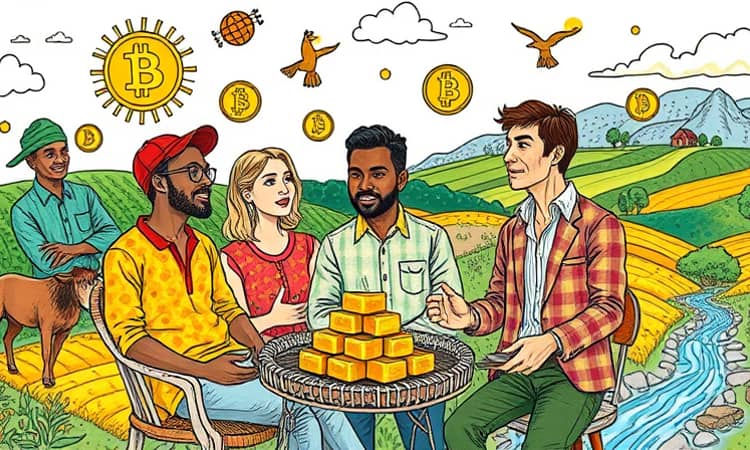
In today’s rapidly shifting economy, the pathways to creating and sustaining wealth demand innovation and bold action.
Traditional advice—steady employment and a 60/40 stock-bond split—no longer guarantees the security it once did, especially amid inflation and speculation-driven markets.
This article explores four distinct paths—entrepreneurship, alternative investments, rural strategies and generational transfers—that challenge conventional wisdom and offer practical guidance to forge your own economic destiny.
Entrepreneurship: The Engine of Self-Made Wealth
For many of the world’s wealthiest individuals, business creation has proven the most potent avenue to prosperity.
90% of global millionaires built their own net worth through entrepreneurial ventures, and among ultra-high-net-worth (UHNW) individuals, entrepreneurs boast a median wealth of $77.7 million.
Risk mitigation strategies—diversifying revenue streams, securing strategic partnerships and maintaining lean operations—enable many entrepreneurs to scale rapidly without overextending.
Embracing failure as a learning tool cultivates a resilient, growth-oriented mindset that underpins sustainable success.
To embark on your own entrepreneurial journey, consider these guiding principles:
- Identify unmet needs in growing markets.
- Leverage technology for scalable solutions.
- Build a network of mentors and advisors.
- Reinvest profits to fuel expansion.
By adopting a mindset of continuous iteration and learning, aspiring founders can position themselves for outsized returns compared to passive employment income.
Alternative Investments: Diversify Beyond Stocks and Bonds
As traditional portfolios struggle under rising inflation and volatile markets, alternative assets offer fresh avenues to diversify risk and enhance returns.
Gold, for instance, has delivered 10.3% 20-year annualized returns for gold and remains uncorrelated with stock and bond markets. Bitcoin, real estate and private equity similarly provide portfolios with ballast when conventional assets falter.
With passive funds inflating mega-cap valuations, active exposure to underfollowed assets can unearth hidden value. Private credit, timberland and art markets illustrate how nontraditional holdings can complement balanced portfolios.
Yet availability is uneven; investors must navigate minimums, regulatory frameworks and specialized due diligence.
Investors motivated by long-term wealth building often pursue alternatives for these reasons:
- Inflation hedge during currency debasement.
- Low correlation with public equities.
- Potential for outsized returns in niche markets.
- Opportunities to back innovative ventures.
According to the World Gold Council, allocating 2–10% of a portfolio to precious metals can smooth volatility and protect purchasing power.
Rural Innovation: Cultivating Prosperity Outside Cities
Beyond the hustle of urban centers, rural regions present untapped potential for wealth creation.
Strategies that foster natural and social capital alongside financial capital can transform local economies and deliver returns exceeding those of metropolitan ventures—albeit with distinct risks.
Cluster-based development, small business growth and attracting the creative class spark a virtuous cycle of innovation and investment.
- Develop industry clusters around agricultural technology.
- Support artisan and craft enterprises for niche markets.
- Foster partnerships between local governments and entrepreneurs.
Digital platforms and remote work trends are reducing the urban-rural divide, enabling rural entrepreneurs to access global customers and talent. Investing in local broadband and co-working spaces amplifies these effects.
While challenges like infrastructure gaps and talent retention persist, success stories from rural innovation hubs illustrate that decentralized wealth creation can be equally rewarding.
The Great Wealth Transfer: Opportunity and Responsibility
Over the next two decades, an unprecedented $124 trillion total will shift hands through inheritances and estates, reshaping the global financial landscape.
Millennials stand to receive $46 trillion, Gen X $39 trillion and an estimated $18 trillion will fund philanthropic causes.
Spousal inheritances account for $54 trillion, predominantly benefiting women, reshaping household dynamics and creating new custodians of family legacies.
Despite the magnitude of this transfer, 72% of Americans report being unconfident managing windfalls, highlighting the need for education and professional guidance.
Designing legacy plans that incorporate both financial stewardship and purposeful giving can empower heirs to steward wealth responsibly.
Navigating Market Shifts: Challenges and Strategies
Market dynamics have evolved dramatically, with speculation and passive investing reshaping price discovery.
Average holding periods on major exchanges have shrunk to 5.5 months compared to eight years in the 1960s, while algorithmic trading accounts for 60–70% of volume and options activity has skyrocketed tenfold since 2019.
These trends tempt investors into over-trading despite low fees, often eroding long-term returns.
Sentiment-driven trading and AI algorithms heighten volatility spikes, making risk controls like stop-loss orders and option hedges essential components of modern portfolios.
- Adopt disciplined rebalancing schedules.
- Resist the allure of short-term speculation.
- Incorporate strategic alternatives for downside protection.
Educational resources and simulation tools can help investors recognize behavioral biases that lead to costly missteps.
Insights from Ultra-High-Net-Worth Behaviors
Studying UHNW individuals reveals patterns that can inform broader wealth-building strategies.
Beyond asset size, many prioritize customized separate managed accounts that reflect their unique risk tolerances and philanthropic objectives.
In 2022, global philanthropy reached $190 billion—a 25% rise since 2018—driven in part by a growing cohort of women donors. Women represent 11% of UHNW populations but account for 22% of high-affinity donors, underscoring a shift toward inclusive, impact-focused wealth management.
Additionally, 61% of investors now embrace AI-driven advice, though 32% report encountering bad advice via social media. Partnering with experienced professionals can help filter noise and maximize outcomes.
Next-generation heirs—48% of millennial business owners—seek professional advice, a stark contrast to only 9% of Boomers. Catering to their values around sustainability and technology can foster long-term engagement.
In rural contexts, mapping intangible capitals requires innovative metrics—such as community engagement scores and ecosystem health indexes—to capture the full spectrum of local wealth.
Whether you are launching a startup in a small town, diversifying with tangible assets or preparing to steward a generational windfall, the common thread is intentionality and adaptability.
Chart your own course and redefine what wealth means to you.